How it works
Measure first.
Your reading gives us better information, so your routine can be chosen with more care. Here’s exactly what happens, what you get, and what the analysis can and can’t see.
01
Analyse
You take six guided photographs and answer twenty questions. The app frames each area and checks the light before it takes the shot.
02
Understand
Each area is read on its own and scored for priority. Every finding is tied to the photograph it came from.
03
Interpret
Your reading explains what the findings mean, what matters now, and what can wait.
04
Plan
Your routine and skin plan: which products, on your skin and from within, in what order, how often, and when to step up.
05
Refine
Reassess as your skin changes. Personalisation is a process, not a questionnaire.
Your skin plan
Good skincare used the wrong way still doesn’t work.
You buy a serum and get a tiny leaflet. How much? Morning or night? So you guess, use too much too soon, and it ends up at the back of the cabinet.
Every Vernier routine comes with a skin plan that tells you exactly what to do, day by day.
The orderMorning and evening, step by step. Every product is named, from the cleanser to the SPF.
How oftenSome products start every second night and build up. You’re told when to step up.
What’s normalMild tingling for a few minutes is expected. Stinging that lasts is not.
When to stopClear stop rules, so you’re never left wondering.
What comes nextA recheck at week 4 before anything stronger is added.


The six photographs
Six areas, read separately.
A cheek and a neck rarely behave the same way, so each area is assessed on its own and given its own priority score from zero to five.
The analysis records only what it can genuinely see. Redness, congestion, texture, dryness, pigment. Every observation is tied to a specific photo.
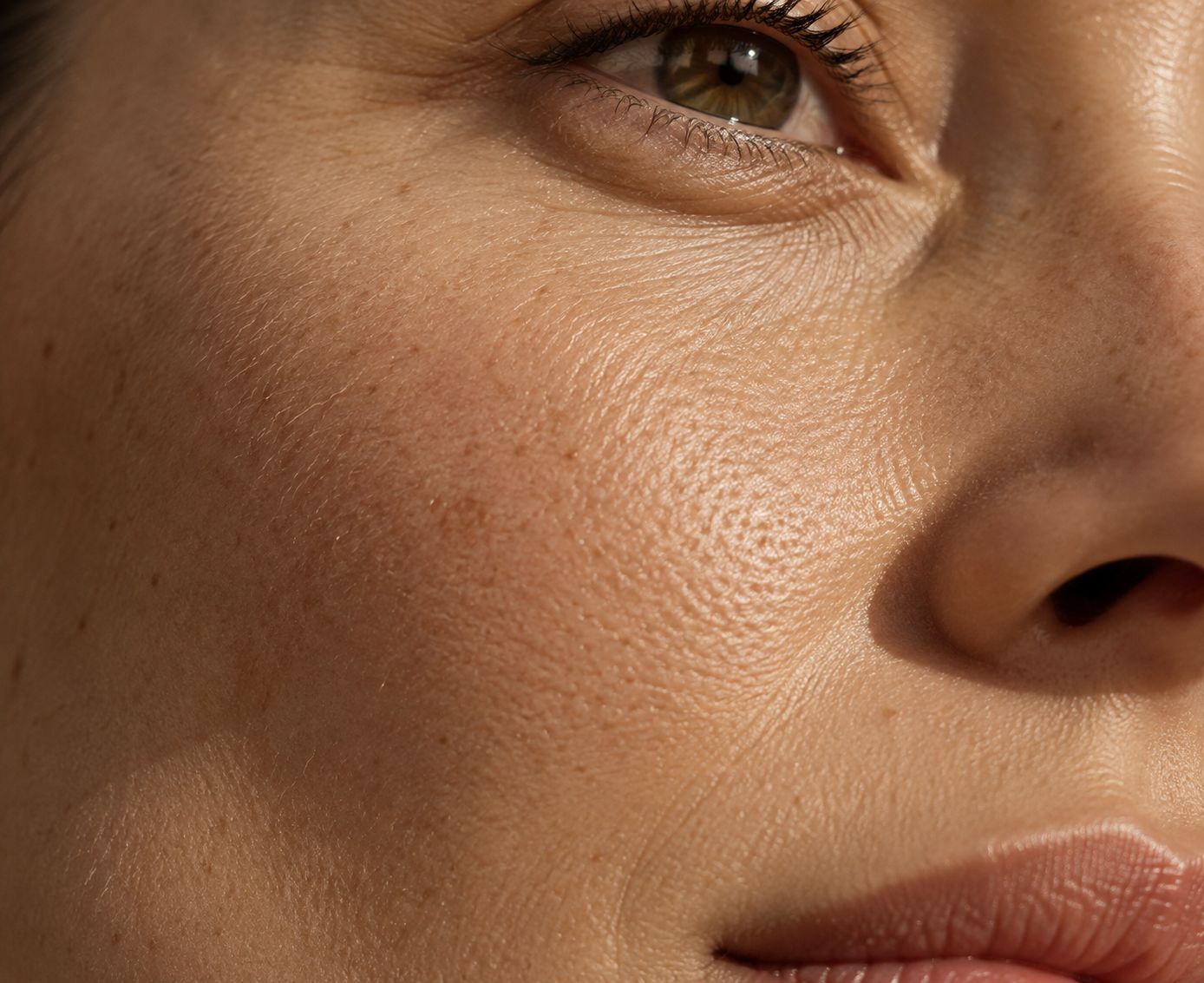
Placeholder photography
01 · ForeheadSurface texture and expression lines
02 · Left cheekDiffuse flushing and inflammatory lesions
03 · Right cheekRedness and congestion
04 · Nose & T-zonePore congestion across the central face
05 · Chin & jawlineClosed comedones and hormonal patterning
06 · Neck & décolletageTexture, pigment and sun history
Getting a good scan
Honest light,
honest texture.

- Face a window, or stand in bright, even daylight. Avoid strong overhead lights and direct sun.
- Remove makeup, sunscreen, glasses and hats. Pull your hair back from your face and neck.
- Hold your phone or tablet at arm’s length, at eye level. The app frames each area and tells you when the light is good enough.
- Keep still. A sharp photo matters more than a close one.
- Clean, bare, product-free skin gives the most honest read. Skip filters entirely.
What the analysis cannot do
The limits, stated plainly.
- The analysis describes visible skin condition only. It never diagnoses, and it cannot detect medical conditions. It is not a skin check for cancer or any other disease.
- Accuracy depends heavily on photo quality. A sharp, well-lit photo reads far better than a dark or blurry one.
- Small or early concerns that are not yet visible cannot be seen by a camera. Mention anything you can feel but not see.
- If your answers flag anything needing human judgement, such as pregnancy or a recent reaction, your reading is held for a practitioner to review first.
- Every recommendation is a starting point a practitioner can make more cautious, never less.
Safety
The gates run before the plan does.
Advanced image analysis proposes. A qualified practitioner reviews. If anything in your answers or your photographs needs human judgement, the reading is held before anything is recommended.

Pregnancy and breastfeeding
Retinoids and certain actives are excluded automatically. The plan switches to alternatives.
Recent procedures
Skin treated in clinic routes to a recovery pathway until it has settled.
Exclusions and referrals
Anything suggesting a medical condition triggers a referral note instead of a product plan.
Contraindicated layering
Actives that should not be combined are never scheduled together.
Sensitivity and ramp-up
Reactive skin starts at reduced frequency and builds, with clear instructions on stepping back.